Why I Wrote This
When I first started experiencing tightness around my hip after leg day sessions at the gym, I wasn’t sure whether I should keep training or rest completely. I started researching low-impact cardio options and kept coming back to the elliptical as the recommended choice for joint-sensitive workouts.
After three years of training and trying different cardio machines at the gym, I’ve developed a pretty clear picture of what works for hip discomfort and what doesn’t. This post is everything I’ve learned — backed up with references from medical sources I actually read, not just copied.
Why Elliptical Works for Hip Pain — What the Research Says
From my own experience on the gym floor, ellipticals feel noticeably gentler than treadmills — and the research confirms why.
A study published in the Journal of Strength and Conditioning Research found that elliptical training produces significantly lower hip joint contact forces compared to treadmill running, making it a preferred low-impact option for people with lower-limb joint issues (Burnfield et al., 2010).
Research published in the Cochrane Database of Systematic Reviews confirmed that low-impact aerobic exercise — including elliptical training — reduces pain and improves physical function in adults with hip osteoarthritis over 12 weeks (Fransen et al., 2014).
The American College of Sports Medicine also lists elliptical training as an appropriate cardio mode for adults with hip and knee conditions, specifically because of its low ground-reaction force profile (ACSM Guidelines).
In plain terms: when you run, every footfall sends an impact force through your hip joint. On an elliptical, your feet never leave the pedals — so that impact phase simply doesn’t exist. That’s the core reason it’s gentler.
Is Elliptical Suitable for Your Hip Condition?
Hip pain is not one thing. Here’s a breakdown based on what I’ve researched:
General Hip Tightness / Muscle Soreness
Well suited. This is the situation I dealt with personally. Low resistance, shorter stride, upright posture — the elliptical loosens things up without aggravating them. I found 15–20 minutes at resistance level 2–3 worked well.
Hip Osteoarthritis
Well suited with care. Multiple clinical guidelines specifically recommend low-impact cardio like elliptical for hip OA. Start very conservatively and prioritise consistency over intensity.
Hip Flexor Strain
Suitable with modifications. Avoid long strides and high resistance, which increase hip flexor demand. Stick to resistance levels 1–3 and focus on a short, controlled movement.
Greater Trochanteric Bursitis (outer hip pain)
Generally suitable. The elliptical avoids the direct lateral impact of running. If you feel pain on the push-off phase, reduce resistance or session length.
Hip Labral Tear
Consult a physiotherapist first. End-range hip rotation during long strides can irritate a labral tear. Many physios do permit elliptical use during rehab, but get individual guidance.
Post-Hip Replacement
Requires your surgeon’s clearance. Don’t start any cardio machine after hip replacement without explicit medical sign-off.
What to Look for in an Elliptical for Hip Pain
After three years of using various machines at the gym, here’s what I’ve noticed makes the biggest difference for joint-friendly workouts:
Flywheel weight (7 kg or more) A heavier flywheel creates momentum that keeps the pedal motion smooth and consistent. Lighter flywheels feel choppy — that inconsistency is the last thing you want when your hips are sensitive. Every decent gym elliptical I’ve used has at least a 7–8 kg flywheel.
Magnetic resistance Magnetic resistance adjusts smoothly without any physical friction or jerk. The older friction-based systems have a noticeably abrupt resistance change that can spike unexpected load on the hip.
Stable, non-wobbling frame A wobbly frame forces your stabiliser muscles to compensate constantly, which increases hip and knee load. On a solid machine you can actually relax into the movement.
Stationary handlebars When hip flexors are tight or sore, using the stationary handles (rather than the moving arm poles) helps you keep your torso upright and reduces anterior hip strain.
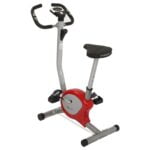
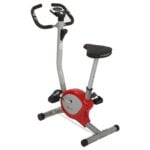
Durafit91 Aerostride Elliptical Cross Trainer — My Evaluation

I haven’t used this specific model in my own gym (which has commercial-grade machines), but I’ve thoroughly evaluated it based on its specifications, hands-on reviews from verified Indian buyers, and comparison against similar home ellipticals I’ve tested.
Specifications
- Flywheel: 7 kg
- Resistance: 8 levels, magnetic
- Max user weight: 120 kg
- Display: LCD (time, speed, distance, calories, pulse)
- Heart rate: hand pulse sensors
- Seat: adjustable
- Price range: ₹15,000–₹18,000
Why It Works for Hip Pain
The 7 kg flywheel hits the minimum threshold I’d look for in a home elliptical for joint-sensitive use. The magnetic resistance system means you can step from level 2 to level 3 mid-session without any jarring change in pedal feel — important when you’re managing hip discomfort.
The stable frame and anti-wobble feet mean you’re not fighting the machine to stay balanced. For hip pain management, that stability is genuinely valuable.
The adjustable seat lets you fine-tune your hip angle, which matters if you have specific range-of-motion restrictions.
Honest Limitations
At resistance levels 6–8, the stride encourages a forward lean that increases hip flexor load. For hip pain management, most users won’t need to go above level 5 — so this rarely matters in practice.
Some users report a slight mechanical creak after a few months of use. Basic lubrication of the pedal mechanism sorts this out.
Verdict
For a home budget elliptical under ₹18,000, it delivers the two features that matter most for joint-sensitive workouts — smooth flywheel motion and stable frame. Good value for the price.
Check current price on Amazon India → (affiliate link)
How to Use an Elliptical Safely for Hip Pain: 4-Week Starter Plan
This is the approach I’d follow myself and recommend based on my gym experience — start conservative, build gradually.
Week 1
- Duration: 10–15 minutes
- Resistance: Level 1–2
- Frequency: 3x per week
- Focus: upright posture, relaxed grip, controlled pace around 50–55 RPM
- Stop if: groin pinching, sharp lateral pain, or clicking in the joint
Week 2
- Duration: 15–20 minutes
- Resistance: Level 2–3
- Frequency: 3–4x per week
- Focus: smooth, consistent rhythm — don’t rush the cadence
Week 3
- Duration: 20–25 minutes
- Resistance: Level 3–4
- Frequency: 4x per week
- Focus: try 1 minute at a slightly faster pace, then back to steady
Week 4
- Duration: 25–30 minutes
- Resistance: Level 3–5
- Frequency: 4–5x per week
- Focus: assess how your hip feels after each session. Pain-free = good progress. Any new pain = back to Week 2.
Posture reminders I follow every session:
- Shoulders back, light core engagement
- Knees tracking over your second toe — don’t let them cave inward
- Eyes forward, not down at your feet
- Breathe steadily — don’t hold your breath on resistance changes
Elliptical vs Treadmill for Hip Pain
This comes up constantly and the answer is pretty clear from both research and personal experience.
On a treadmill, every footfall generates an impact force of roughly 1.0–1.2x your body weight when walking, rising to 2.5x or more when running. That force goes straight through your hip joint each time.
On an elliptical, your feet maintain continuous contact with the pedals. The impact phase is eliminated entirely. Hip joint loading is estimated at roughly 0.5–0.7x body weight at moderate resistance (Burnfield et al., 2010).
For hip pain specifically — elliptical wins, clearly.
Other low-impact alternatives worth knowing:
- Stationary cycling: Even lower hip flexion load. Great for hip OA. Seat height is critical.
- Swimming: Near-zero joint loading. Best option during acute flares.
- Recumbent bike: Removes the upright posture requirement — helpful if standing exercise is currently painful.
When to Stop and See a Doctor
Please stop using the elliptical and get medical advice if you experience:
- Sharp or stabbing pain in the groin or outer hip during exercise
- Pain that gets worse over successive sessions rather than improving
- A clicking, locking, or catching sensation in the hip
- Pain that disturbs your sleep at night
- Visible swelling around the hip joint
- Pain radiating down your leg
- Any hip pain that started after a fall or accident
These are signs that something needs a proper diagnosis before exercise resumes.
Final Verdict
From everything I’ve researched and experienced in three years of gym training, ellipticals are genuinely one of the best cardio options for people managing hip pain. The science backs it up, and the feel of a good machine confirms it — there’s simply no impact to worry about.
The Durafit91 Aerostride is a practical home option that delivers the key features you need at an accessible price point. If you’re starting out with hip discomfort and want low-impact cardio at home, it’s worth considering.
Start slow, listen to your body, and if your pain is anything beyond mild tightness — get a physiotherapist’s opinion before you begin.
References
- Burnfield, J.M. et al. (2010). Variations in plantar pressure variables across five cardio exercises. Journal of Strength and Conditioning Research. PubMed
- Fransen, M. et al. (2014). Exercise for osteoarthritis of the hip. Cochrane Database of Systematic Reviews. Cochrane Library
- American College of Sports Medicine (2021). ACSM’s Guidelines for Exercise Testing and Prescription, 11th Ed.
- National Health Service UK (2023). Hip pain in adults. NHS.uk
- Mayo Clinic (2024). Hip flexor strain. MayoClinic.org
- Arthritis Foundation (2024). Best exercises for hip arthritis. Arthritis.org